Cheat
grpcurl curl for gRPC
 Light · Postcard
102 × 152 mm · PDF
 Dark · Postcard
102 × 152 mm · PDF
 Ink saver · Postcard
102 × 152 mm · PDF
 Light · A4 landscape
297 × 210 mm · PDF
 Dark · A4 landscape
297 × 210 mm · PDF
 Ink saver · A4 landscape
297 × 210 mm · PDF
 Light · A3 landscape
420 × 297 mm · PDF
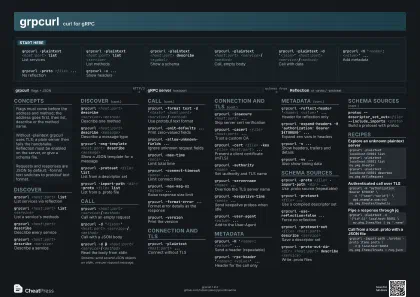 Dark · A3 landscape
420 × 297 mm · PDF
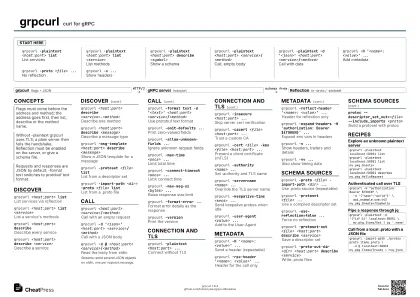 Ink saver · A3 landscape
420 × 297 mm · PDF
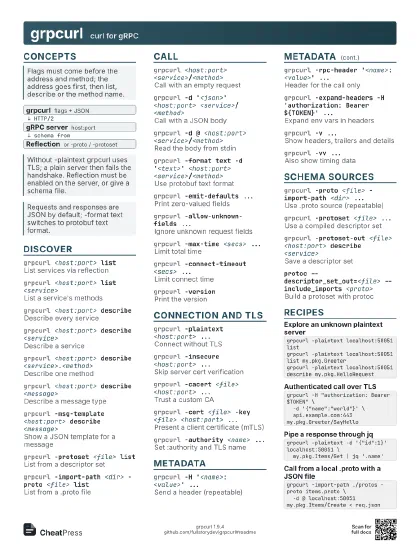
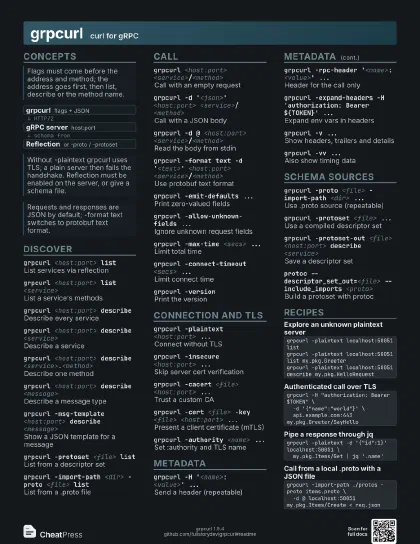
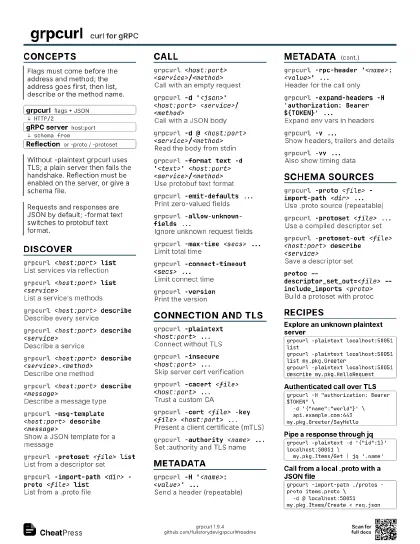
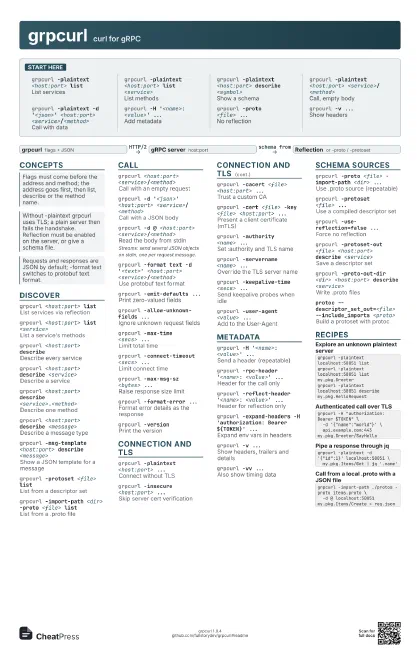
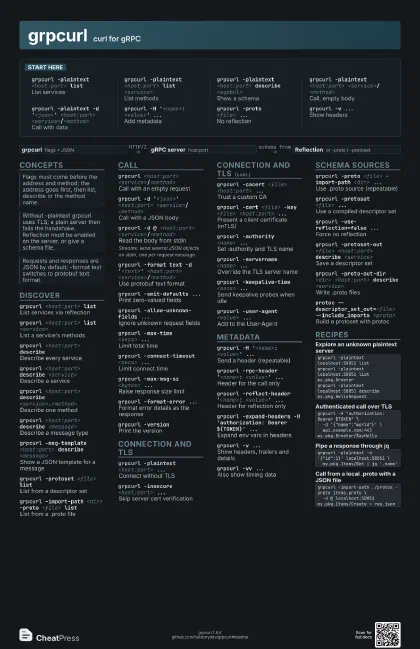
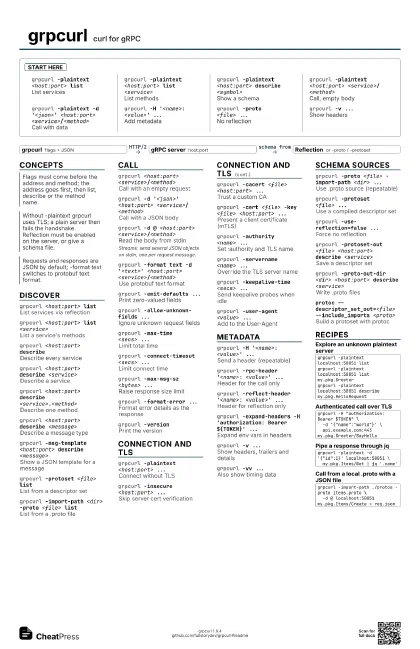
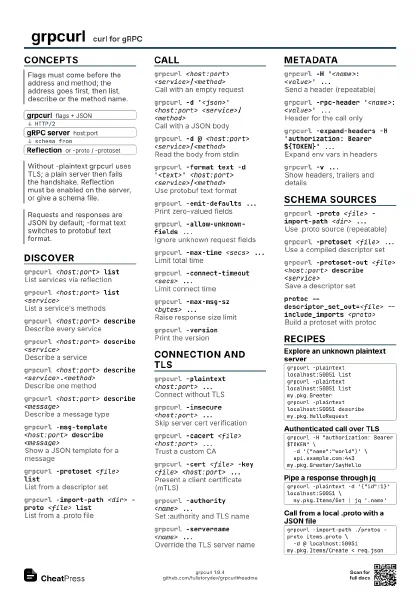
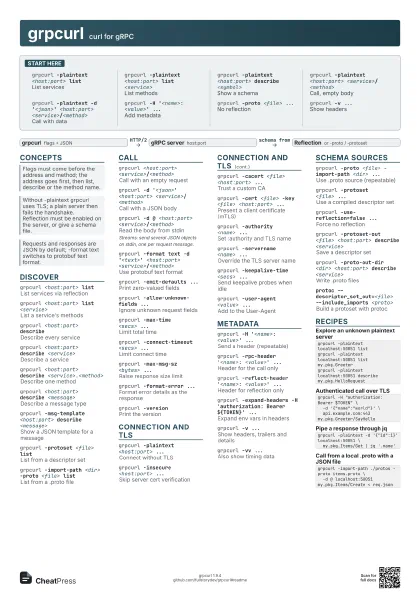
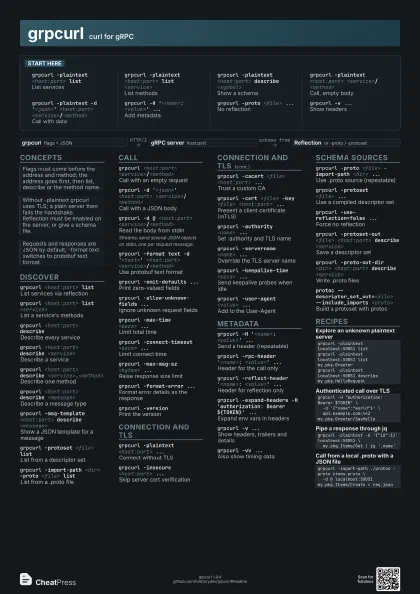
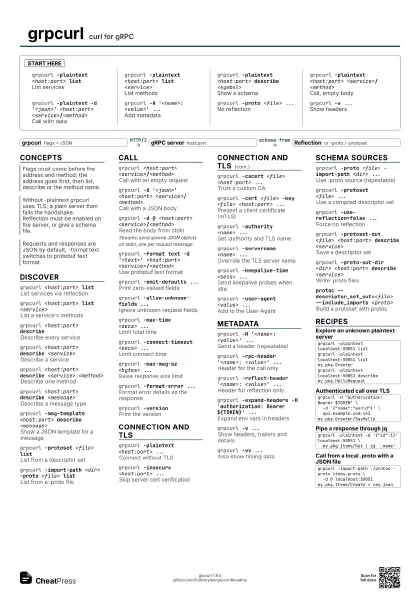
Start here
grpcurl -plaintext <host:port> list
List services
grpcurl -plaintext <host:port> list
                    <service>
List methods
grpcurl -plaintext <host:port> describe
                    <symbol>
Show a schema
grpcurl -plaintext <host:port>
                    <service>/<method>
Call, empty body
grpcurl -plaintext -d '<json>'
                    <host:port> <service>/<method>
Call with data
grpcurl -H '<name>: <value>' ...
Add metadata
grpcurl -proto <file> ...
No reflection
grpcurl -v ...Show headers
Concepts
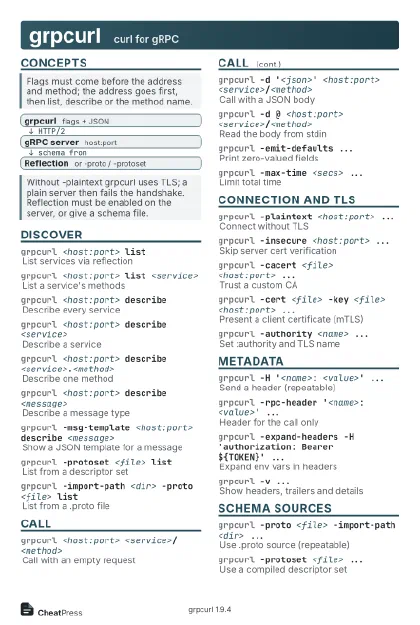
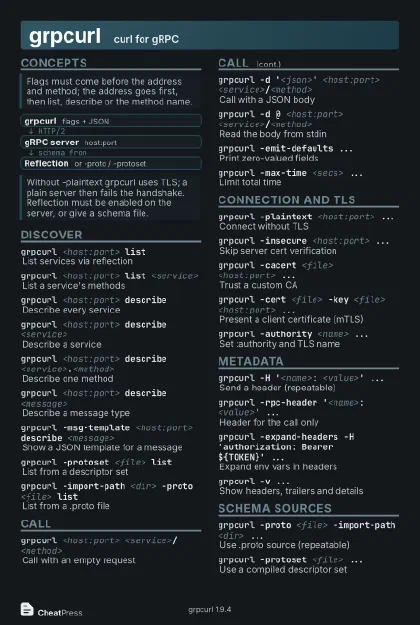
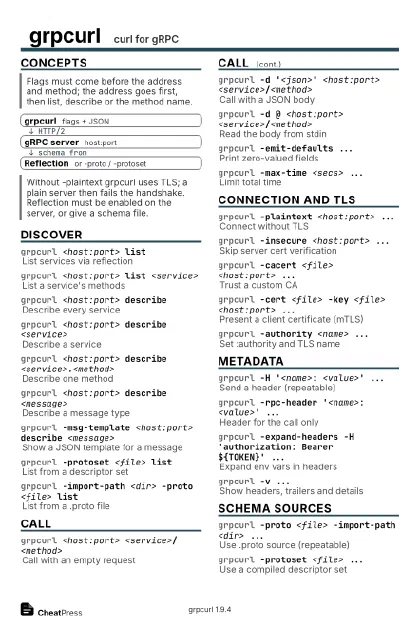
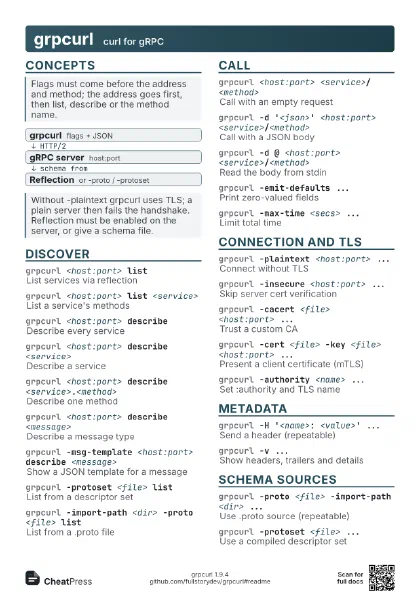
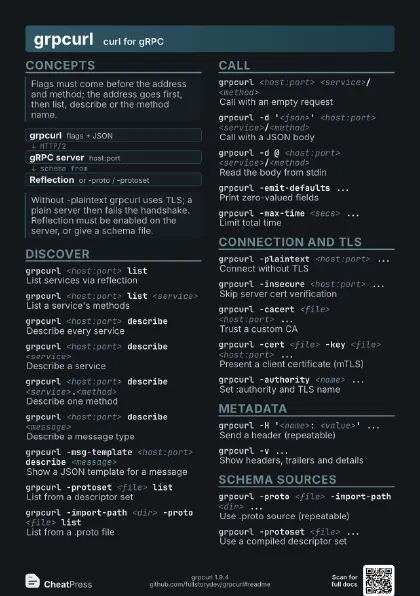
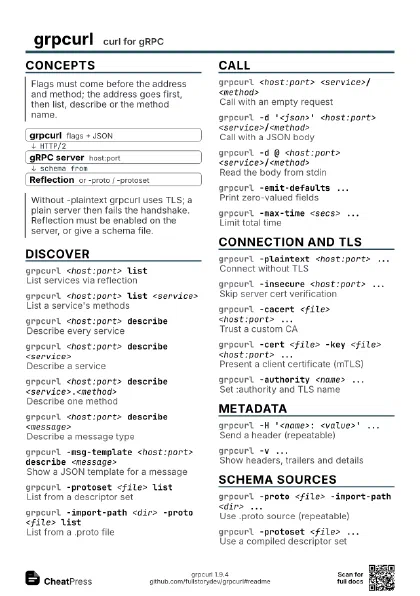
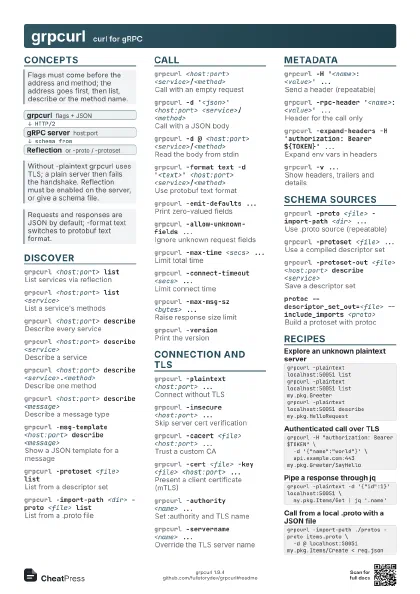
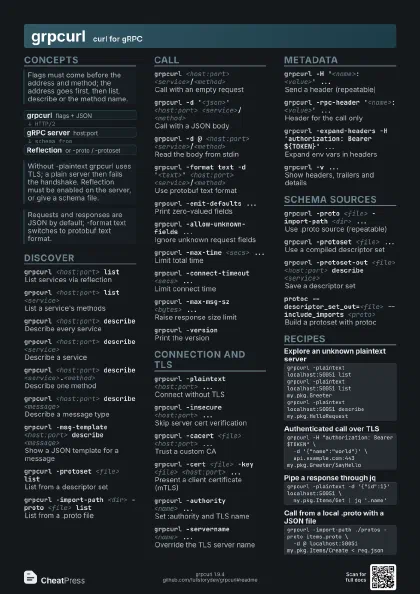
- grpcurl flags + JSON
- gRPC server host:port
- Reflection or -proto / -protoset
Discover
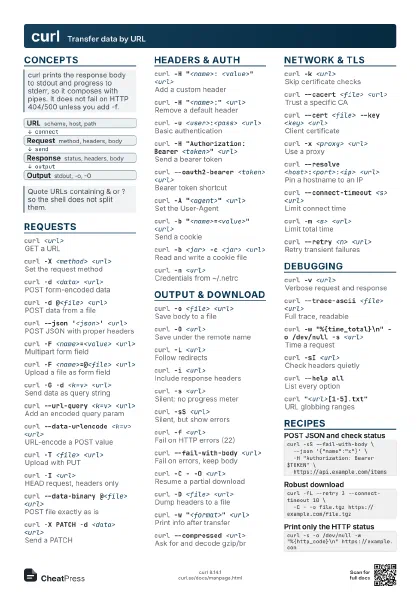
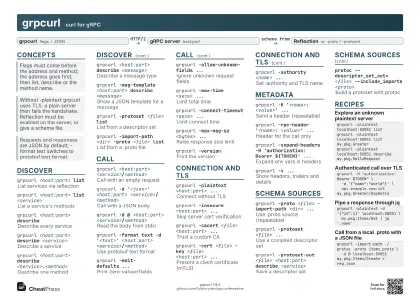
grpcurl <host:port> list
List services via reflection
grpcurl <host:port> list <service>
List a service's methods
grpcurl <host:port> describe
Describe every service
grpcurl <host:port> describe <service>
Describe a service
grpcurl <host:port> describe
                    <service>.<method>
Describe one method
grpcurl <host:port> describe <message>
Describe a message type
grpcurl -msg-template <host:port> describe
                    <message>
Show a JSON template for a message
grpcurl -protoset <file> list
List from a descriptor set
grpcurl -import-path <dir> -proto <file>
                    list
List from a .proto file
Call
grpcurl <host:port>
                    <service>/<method>
Call with an empty request
grpcurl -d '<json>' <host:port>
                    <service>/<method>
Call with a JSON body
grpcurl -d @ <host:port>
                    <service>/<method>
Read the body from stdin
Streams: send several JSON objects on stdin, one per request
message.
grpcurl -format text -d '<text>'
                    <host:port> <service>/<method>
Use protobuf text format
grpcurl -emit-defaults ...
Print zero-valued fields
grpcurl -allow-unknown-fields ...
Ignore unknown request fields
grpcurl -max-time <secs> ...
Limit total time
grpcurl -connect-timeout <secs> ...
Limit connect time
grpcurl -max-msg-sz <bytes> ...
Raise response size limit
grpcurl -format-error ...
Format error details as the response
grpcurl -version
Print the version
Connection and TLS
grpcurl -plaintext <host:port> ...
Connect without TLS
grpcurl -insecure <host:port> ...
Skip server cert verification
grpcurl -cacert <file> <host:port> ...
Trust a custom CA
grpcurl -cert <file> -key <file>
                    <host:port> ...
Present a client certificate (mTLS)
grpcurl -authority <name> ...
Set :authority and TLS name
grpcurl -servername <name> ...
Override the TLS server name
grpcurl -keepalive-time <secs> ...
Send keepalive probes when idle
grpcurl -user-agent <value> ...
Add to the User-Agent
Metadata
grpcurl -H '<name>: <value>' ...
Send a header (repeatable)
grpcurl -rpc-header '<name>: <value>'
                    ...
Header for the call only
grpcurl -reflect-header '<name>:
                    <value>' ...
Header for reflection only
grpcurl -expand-headers -H 'authorization: Bearer
                    ${TOKEN}' ...
Expand env vars in headers
grpcurl -v ...Show headers, trailers and details
grpcurl -vv ...Also show timing data
Schema sources
grpcurl -proto <file> -import-path <dir>
                    ...
Use .proto source (repeatable)
grpcurl -protoset <file> ...
Use a compiled descriptor set
grpcurl -use-reflection=false ...
Force no reflection
grpcurl -protoset-out <file> <host:port>
                    describe <service>
Save a descriptor set
grpcurl -proto-out-dir <dir> <host:port>
                    describe <service>
Write .proto files
protoc --descriptor_set_out=<file> --include_imports
                    <proto>
Build a protoset with protoc
Recipes
grpcurl -plaintext localhost:50051 listgrpcurl -plaintext localhost:50051 list my.pkg.Greetergrpcurl -plaintext localhost:50051 describe my.pkg.HelloRequestgrpcurl -H "authorization: Bearer $TOKEN" \ -d '{"name":"world"}' \ api.example.com:443 my.pkg.Greeter/SayHellogrpcurl -plaintext -d '{"id":1}' localhost:50051 \ my.pkg.Items/Get | jq '.name'grpcurl -import-path ./protos -proto items.proto \ -d @ localhost:50051 my.pkg.Items/Create < req.json