Cheat
Coverage.py Python code coverage
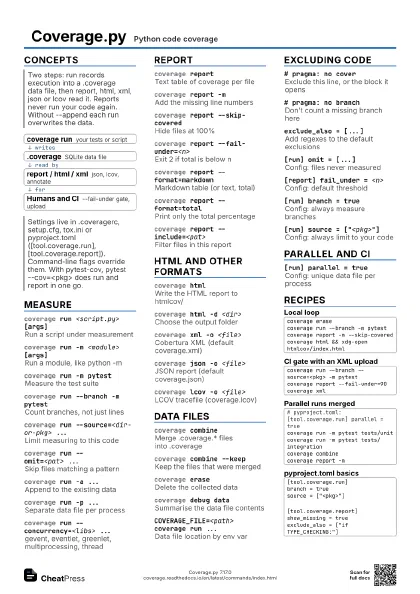
 Light · Postcard
102 × 152 mm · PDF
 Dark · Postcard
102 × 152 mm · PDF
 Ink saver · Postcard
102 × 152 mm · PDF
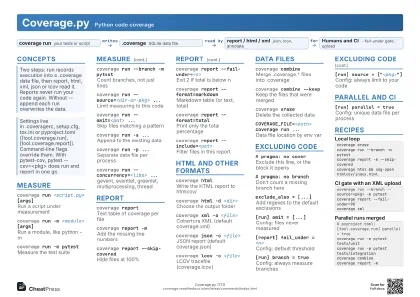 Light · A4 landscape
297 × 210 mm · PDF
 Dark · A4 landscape
297 × 210 mm · PDF
 Ink saver · A4 landscape
297 × 210 mm · PDF
 Light · A3 landscape
420 × 297 mm · PDF
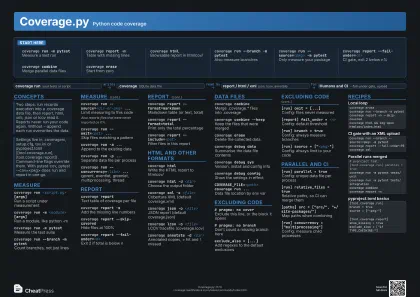 Dark · A3 landscape
420 × 297 mm · PDF
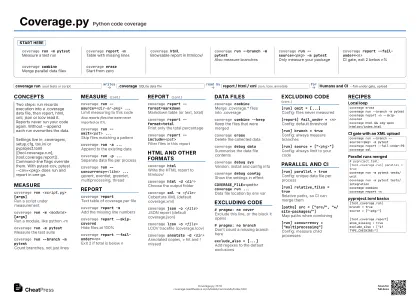 Ink saver · A3 landscape
420 × 297 mm · PDF
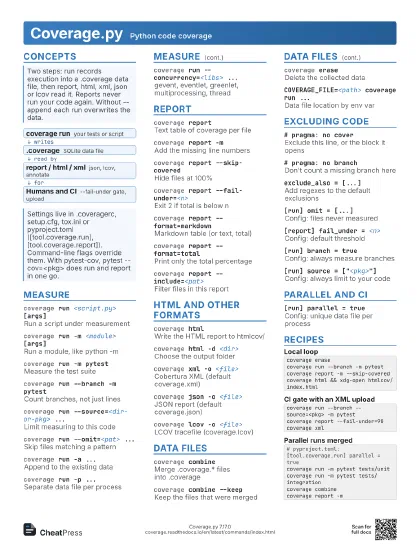
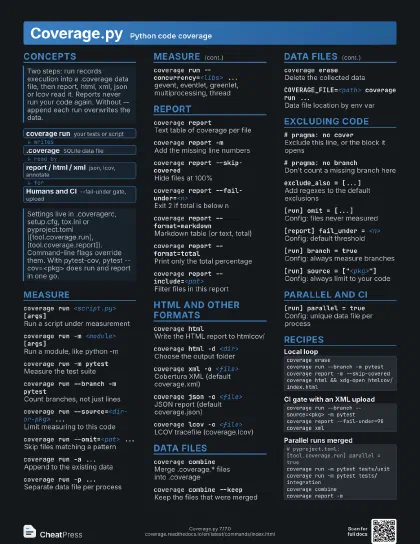
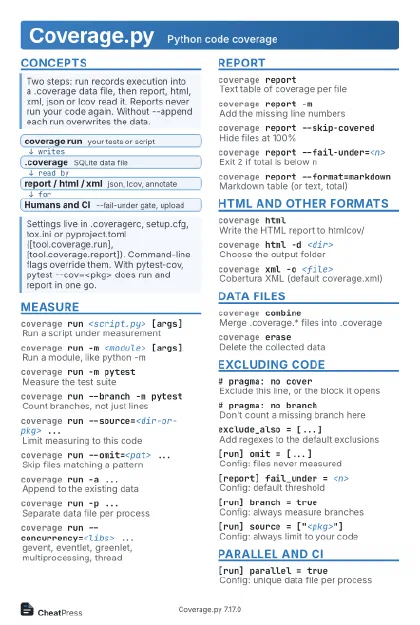
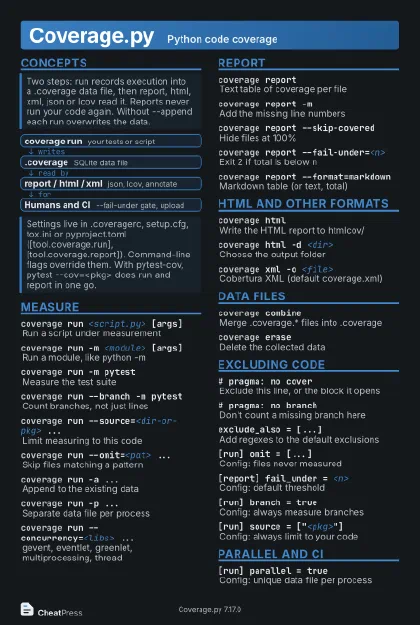
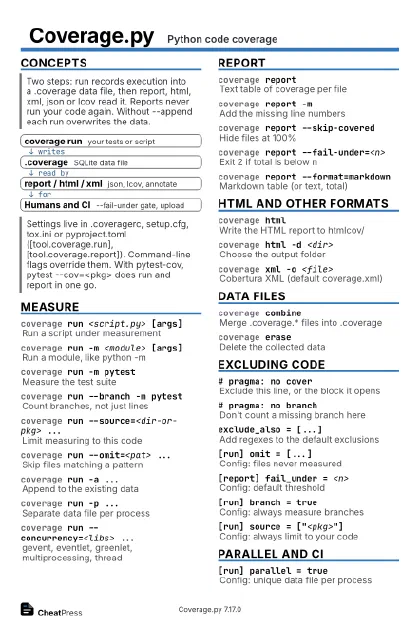
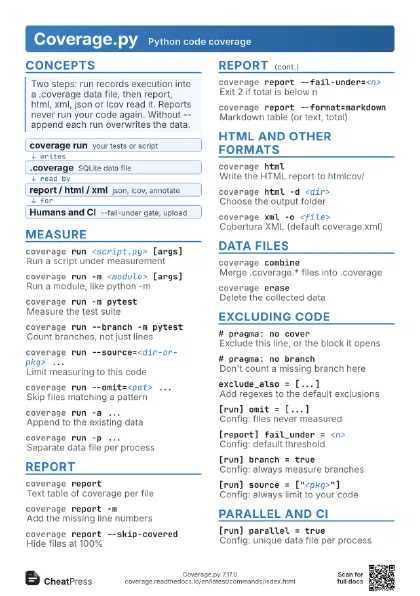
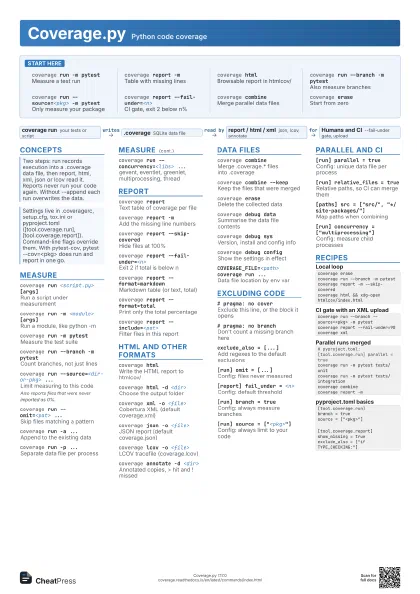
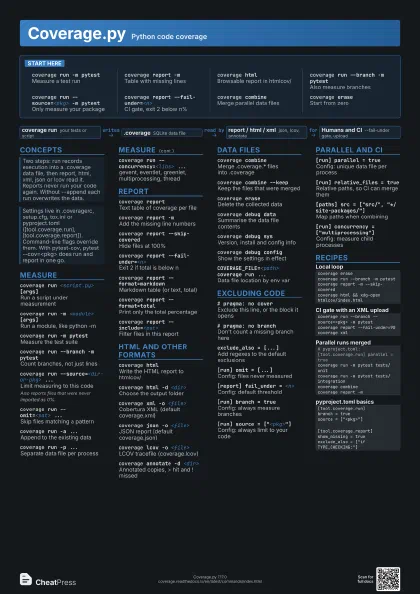
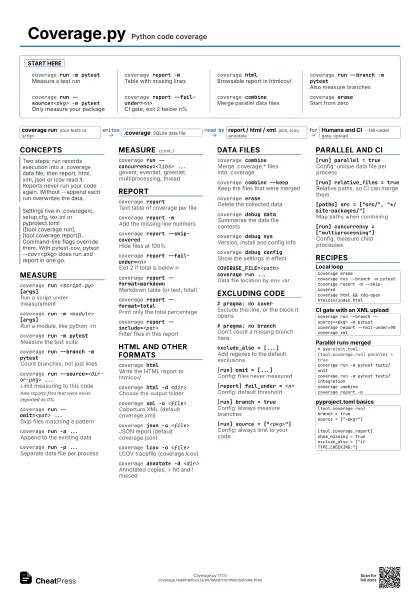
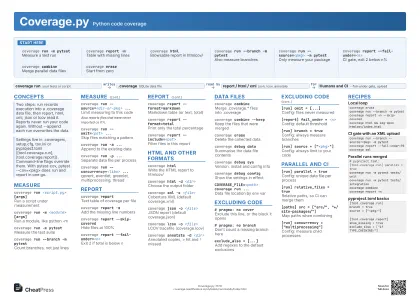
Start here
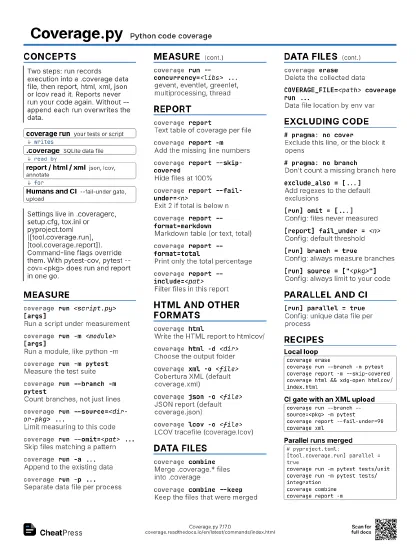
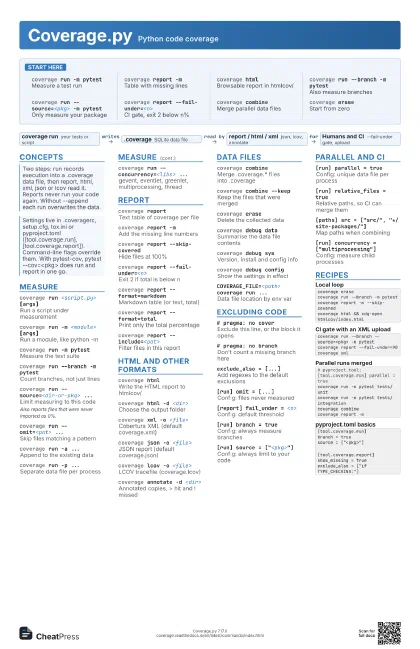
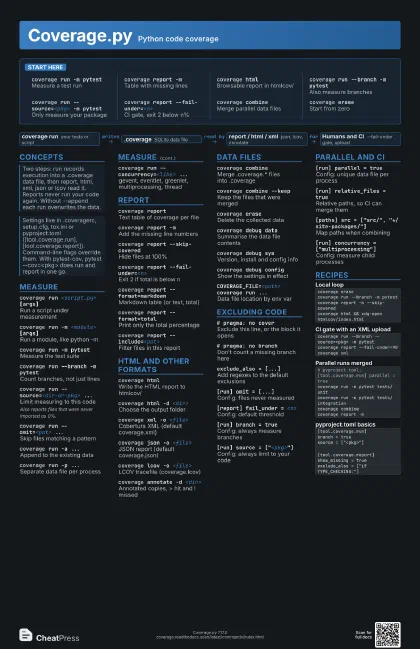
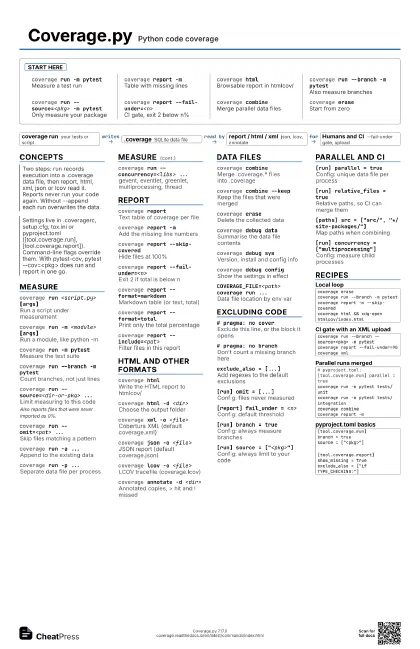
coverage run -m pytest
Measure a test run
coverage report -m
Table with missing lines
coverage htmlBrowsable report in htmlcov/
coverage run --branch -m pytest
Also measure branches
coverage run --source=<pkg> -m pytest
Only measure your package
coverage report --fail-under=<n>
CI gate, exit 2 below n%
coverage combine
Merge parallel data files
coverage eraseStart from zero
Concepts
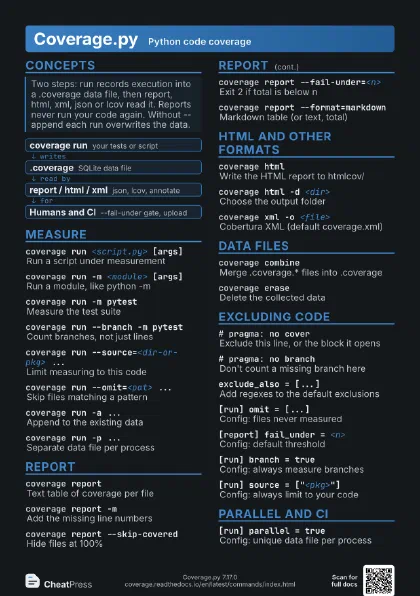
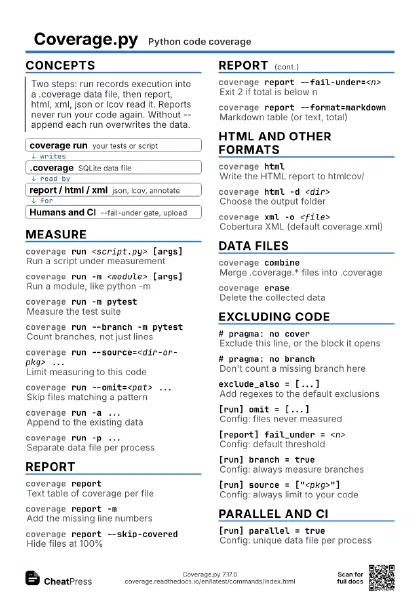
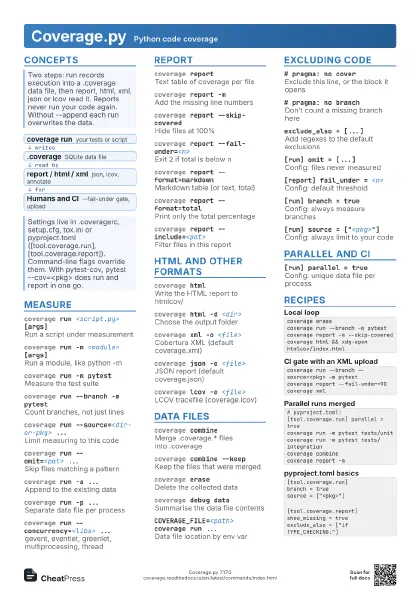
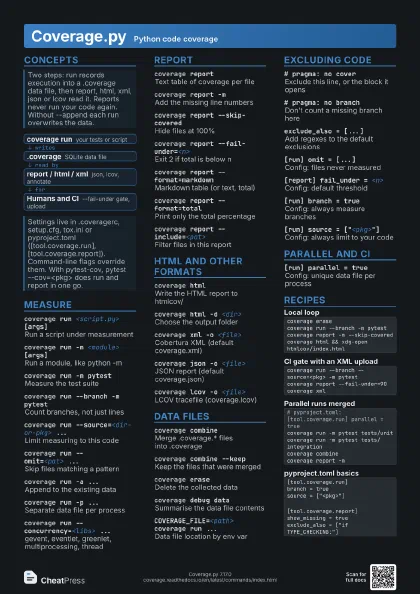
- coverage run your tests or script
- .coverage SQLite data file
- report / html / xml json, lcov, annotate
- Humans and CI --fail-under gate, upload
Measure
coverage run <script.py> [args]
Run a script under measurement
coverage run -m <module> [args]
Run a module, like python -m
coverage run -m pytest
Measure the test suite
coverage run --branch -m pytest
Count branches, not just lines
coverage run --source=<dir-or-pkg> ...
Limit measuring to this code
Also reports files that were never imported as 0%.
coverage run --omit=<pat> ...
Skip files matching a pattern
coverage run -a ...
Append to the existing data
coverage run -p ...
Separate data file per process
coverage run --concurrency=<libs> ...
gevent, eventlet, greenlet, multiprocessing, thread
Report
coverage reportText table of coverage per file
coverage report -m
Add the missing line numbers
coverage report --skip-covered
Hide files at 100%
coverage report --fail-under=<n>
Exit 2 if total is below n
coverage report --format=markdown
Markdown table (or text, total)
coverage report --format=total
Print only the total percentage
coverage report --include=<pat>
Filter files in this report
HTML and other formats
coverage htmlWrite the HTML report to htmlcov/
coverage html -d <dir>
Choose the output folder
coverage xml -o <file>
Cobertura XML (default coverage.xml)
coverage json -o <file>
JSON report (default coverage.json)
coverage lcov -o <file>
LCOV tracefile (coverage.lcov)
coverage annotate -d <dir>
Annotated copies, > hit and ! missed
Data files
coverage combine
Merge .coverage.* files into .coverage
coverage combine --keep
Keep the files that were merged
coverage eraseDelete the collected data
coverage debug data
Summarise the data file contents
coverage debug sys
Version, install and config info
coverage debug config
Show the settings in effect
COVERAGE_FILE=<path> coverage run ...
Data file location by env var
Excluding code
# pragma: no cover
Exclude this line, or the block it opens
# pragma: no branch
Don't count a missing branch here
exclude_also = [...]
Add regexes to the default exclusions
[run] omit = [...]
Config: files never measured
[report] fail_under = <n>
Config: default threshold
[run] branch = true
Config: always measure branches
[run] source = ["<pkg>"]
Config: always limit to your code
Parallel and CI
[run] parallel = true
Config: unique data file per process
[run] relative_files = true
Relative paths, so CI can merge them
[paths] src = ["src/",
                    "*/site-packages/"]
Map paths when combining
[run] concurrency = ["multiprocessing"]
Config: measure child processes
Recipes
coverage erasecoverage run --branch -m pytestcoverage report -m --skip-coveredcoverage html && xdg-open htmlcov/index.htmlcoverage run --branch --source=<pkg> -m pytestcoverage report --fail-under=90coverage xml# pyproject.toml: [tool.coverage.run] parallel = truecoverage run -m pytest tests/unitcoverage run -m pytest tests/integrationcoverage combinecoverage report -m[tool.coverage.run]branch = truesource = ["<pkg>"][tool.coverage.report]show_missing = trueexclude_also = ["if TYPE_CHECKING:"]