Cheat
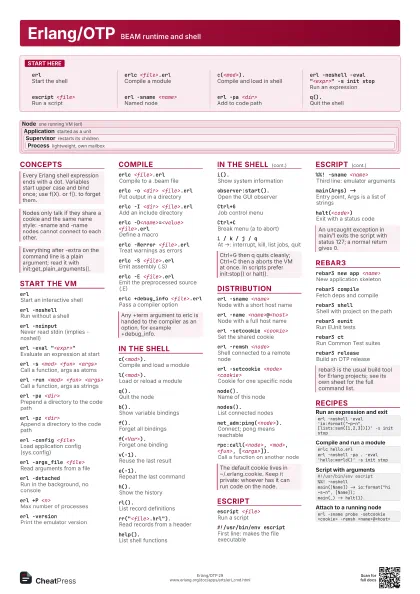
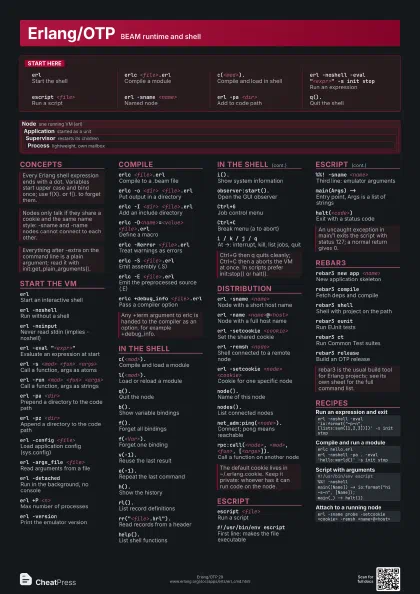
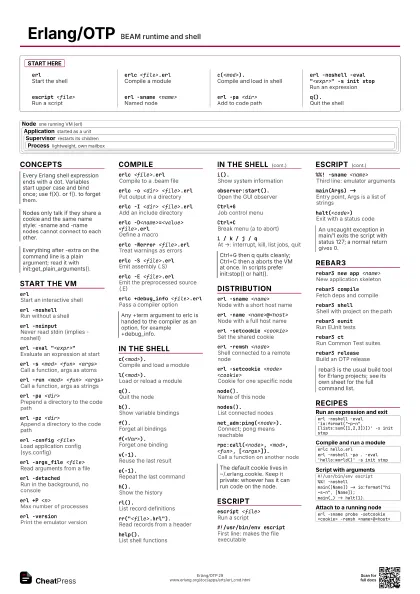
Erlang/OTP BEAM runtime and shell
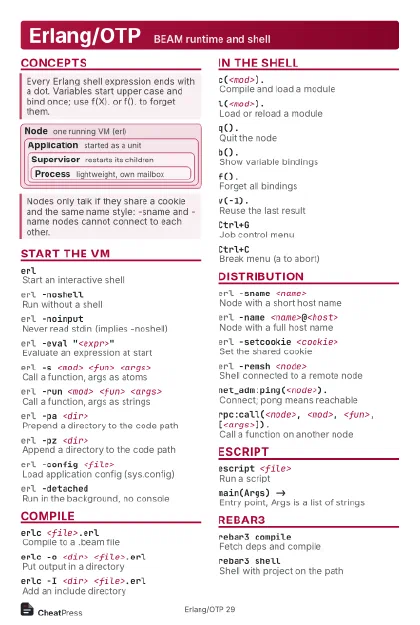 Light · Postcard
102 × 152 mm · PDF
 Dark · Postcard
102 × 152 mm · PDF
 Ink saver · Postcard
102 × 152 mm · PDF
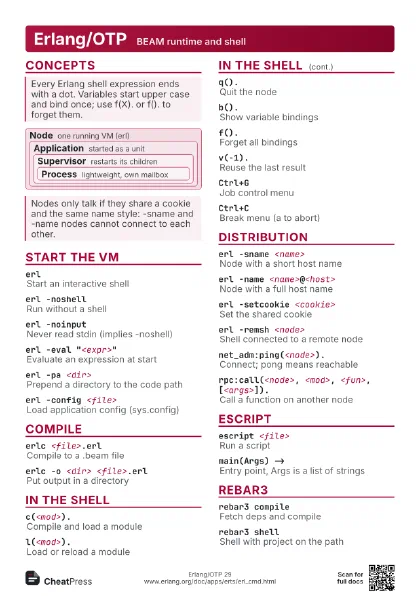
 Light · A4 landscape
297 × 210 mm · PDF
 Dark · A4 landscape
297 × 210 mm · PDF
 Ink saver · A4 landscape
297 × 210 mm · PDF
 Light · A3 landscape
420 × 297 mm · PDF
 Dark · A3 landscape
420 × 297 mm · PDF
 Ink saver · A3 landscape
420 × 297 mm · PDF
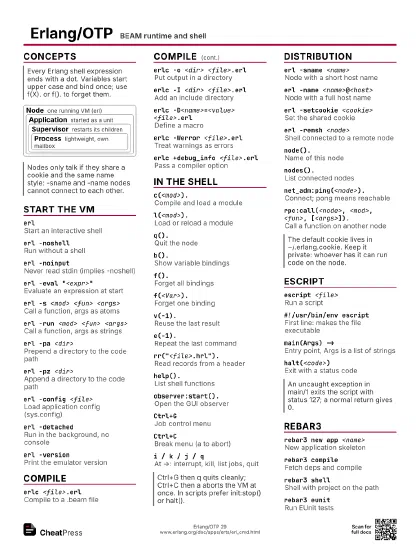
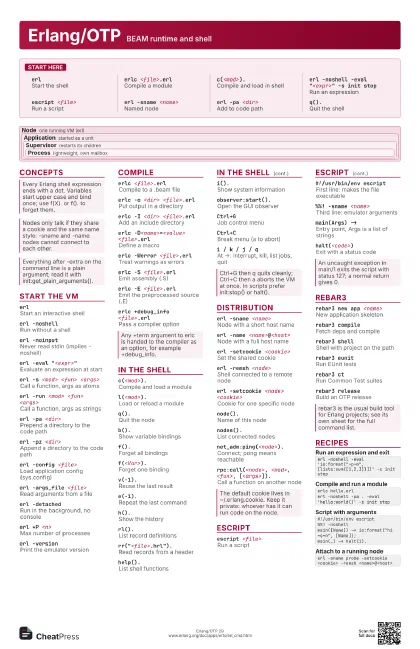
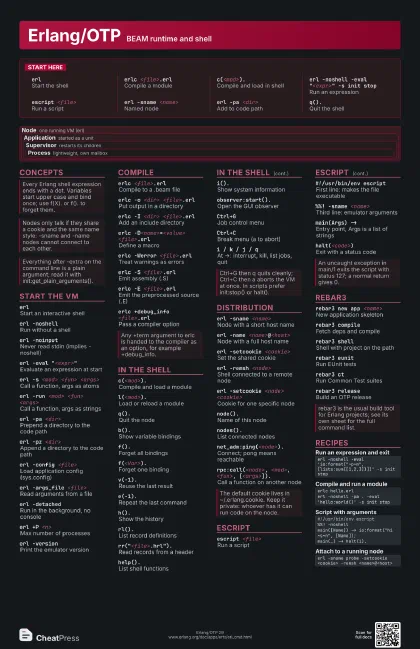
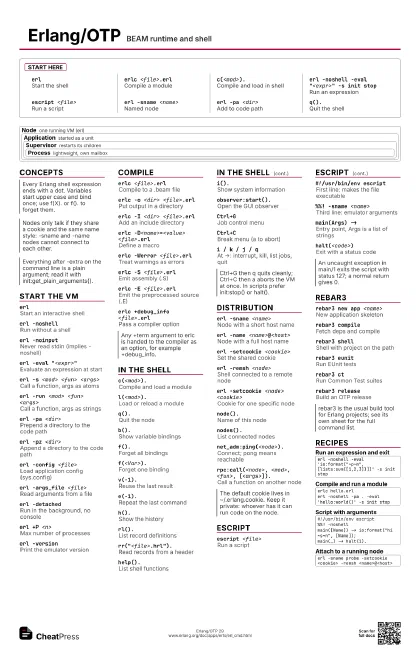
Start here
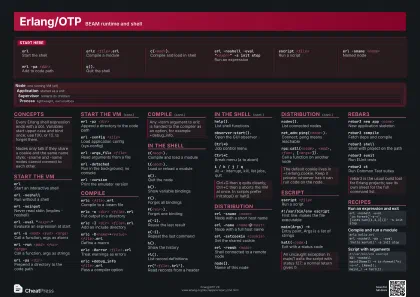
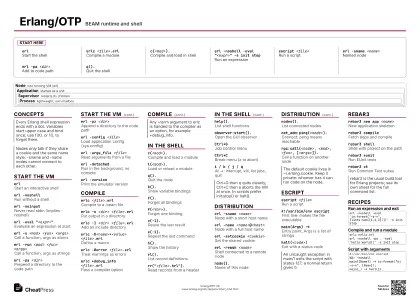
erlStart the shell
erlc <file>.erl
Compile a module
c(<mod>).Compile and load in shell
erl -noshell -eval "<expr>" -s init
                    stop
Run an expression
escript <file>
Run a script
erl -sname <name>
Named node
erl -pa <dir>
Add to code path
q().Quit the shell
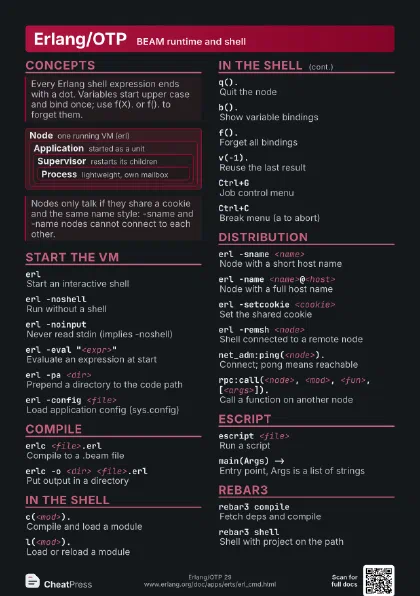
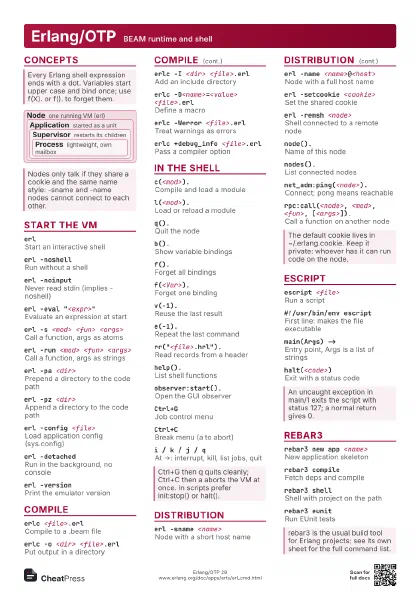
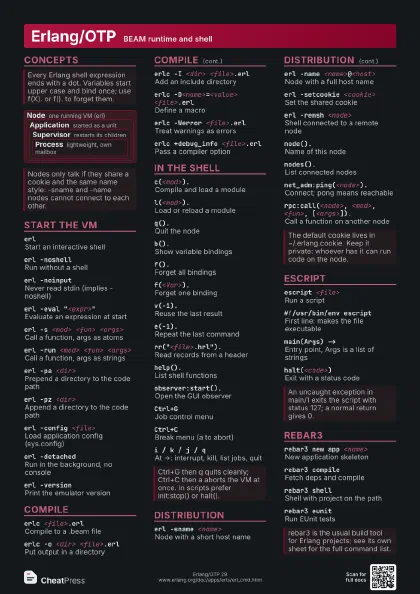
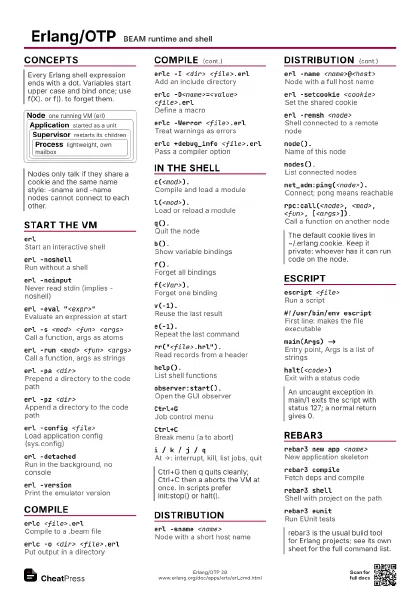
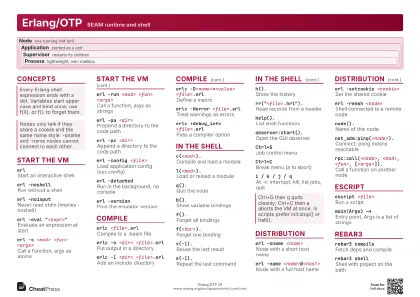
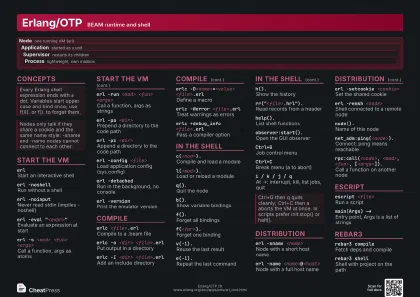
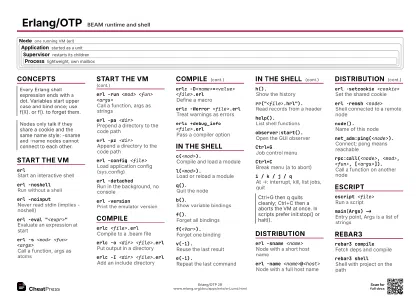
Concepts
Node one running VM (erl)
Application
started as a unit
Supervisor
restarts its children
Process
lightweight, own mailbox
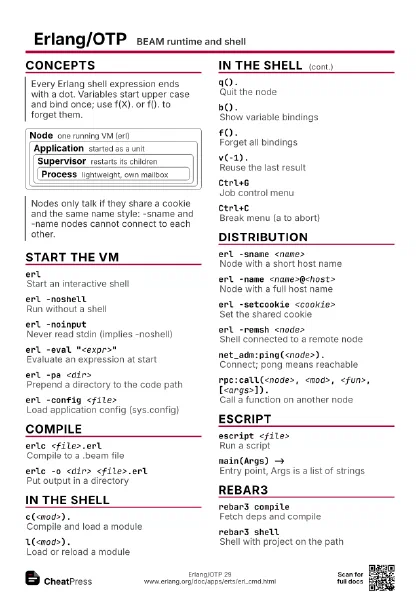
Start the VM
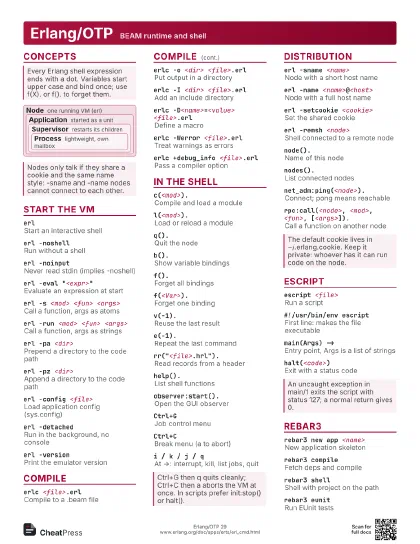
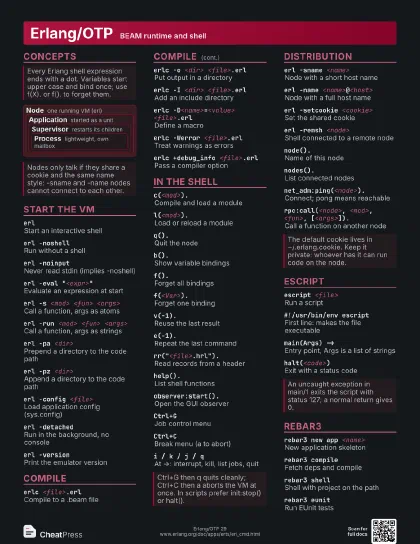
erlStart an interactive shell
erl -noshellRun without a shell
erl -noinputNever read stdin (implies -noshell)
erl -eval "<expr>"
Evaluate an expression at start
erl -s <mod> <fun> <args>
Call a function, args as atoms
erl -run <mod> <fun> <args>
Call a function, args as strings
erl -pa <dir>
Prepend a directory to the code path
erl -pz <dir>
Append a directory to the code path
erl -config <file>
Load application config (sys.config)
erl -args_file <file>
Read arguments from a file
erl -detachedRun in the background, no console
erl +P <n>
Max number of processes
erl -versionPrint the emulator version
Compile
erlc <file>.erl
Compile to a .beam file
erlc -o <dir> <file>.erl
Put output in a directory
erlc -I <dir> <file>.erl
Add an include directory
erlc -D<name>=<value> <file>.erl
Define a macro
erlc -Werror <file>.erl
Treat warnings as errors
erlc -S <file>.erl
Emit assembly (.S)
erlc -E <file>.erl
Emit the preprocessed source (.E)
erlc +debug_info <file>.erl
Pass a compiler option
In the shell
c(<mod>).Compile and load a module
l(<mod>).Load or reload a module
q().Quit the node
b().Show variable bindings
f().Forget all bindings
f(<Var>).Forget one binding
v(-1).Reuse the last result
e(-1).Repeat the last command
h().Show the history
rl().List record definitions
rr("<file>.hrl").
Read records from a header
help().List shell functions
i().Show system information
observer:start().
Open the GUI observer
Ctrl+GJob control menu
Ctrl+CBreak menu (a to abort)
i / k / j / q
At ->: interrupt, kill, list jobs, quit
Distribution
erl -sname <name>
Node with a short host name
erl -name <name>@<host>
Node with a full host name
erl -setcookie <cookie>
Set the shared cookie
erl -remsh <node>
Shell connected to a remote node
erl -setcookie <node> <cookie>
Cookie for one specific node
node().Name of this node
nodes().List connected nodes
net_adm:ping(<node>).
Connect; pong means reachable
rpc:call(<node>, <mod>, <fun>,
                    [<args>]).
Call a function on another node
Escript
escript <file>
Run a script
#!/usr/bin/env escript
First line: makes the file executable
%%! -sname <name>
Third line: emulator arguments
main(Args) ->
Entry point, Args is a list of strings
halt(<code>)
Exit with a status code
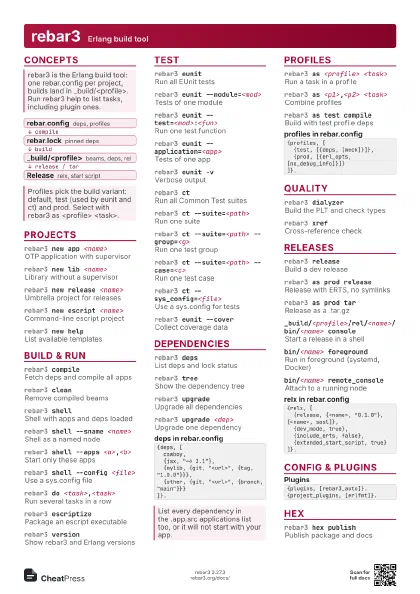
Rebar3
rebar3 new app <name>
New application skeleton
rebar3 compileFetch deps and compile
rebar3 shellShell with project on the path
rebar3 eunitRun EUnit tests
rebar3 ctRun Common Test suites
rebar3 releaseBuild an OTP release
Recipes
erl -noshell -eval 'io:format("~p~n", [lists:sum([1,2,3])])' -s init stoperlc hello.erlerl -noshell -pa . -eval 'hello:world()' -s init stop#!/usr/bin/env escript%%! -noshellmain([Name]) -> io:format("hi ~s~n", [Name]);main(_) -> halt(1).erl -sname probe -setcookie <cookie> -remsh <name>@<host>